
FOR LEADERS AND LEADERSHIP TEAMS
The Team Diagnostic
Before we can change what's not working, we need to see it clearly.
The PERILL Team Diagnostic is how we move from assumptions to evidence, from surface symptoms to the structural and relational factors that are actually driving your team's performance.

Why start with a diagnostic
Most teams already know something isn't working. The meetings feel heavy. The same tensions keep recycling. People are polite but not honest. What they don't know and what no amount of workshop discussion can reliably surface is why.
Is it a trust issue or a clarity issue?
A leadership dynamic or a structural problem?
Are the silos caused by people or by the incentive system around them?
The diagnostic answers these questions with data and not opinions.
It gives us a shared, objective picture of where the team actually stands, so that every intervention that follows is aimed at the right target.
Without it, you're guessing. With it, you're building on evidence.
What the PERILL Diagnostic measures
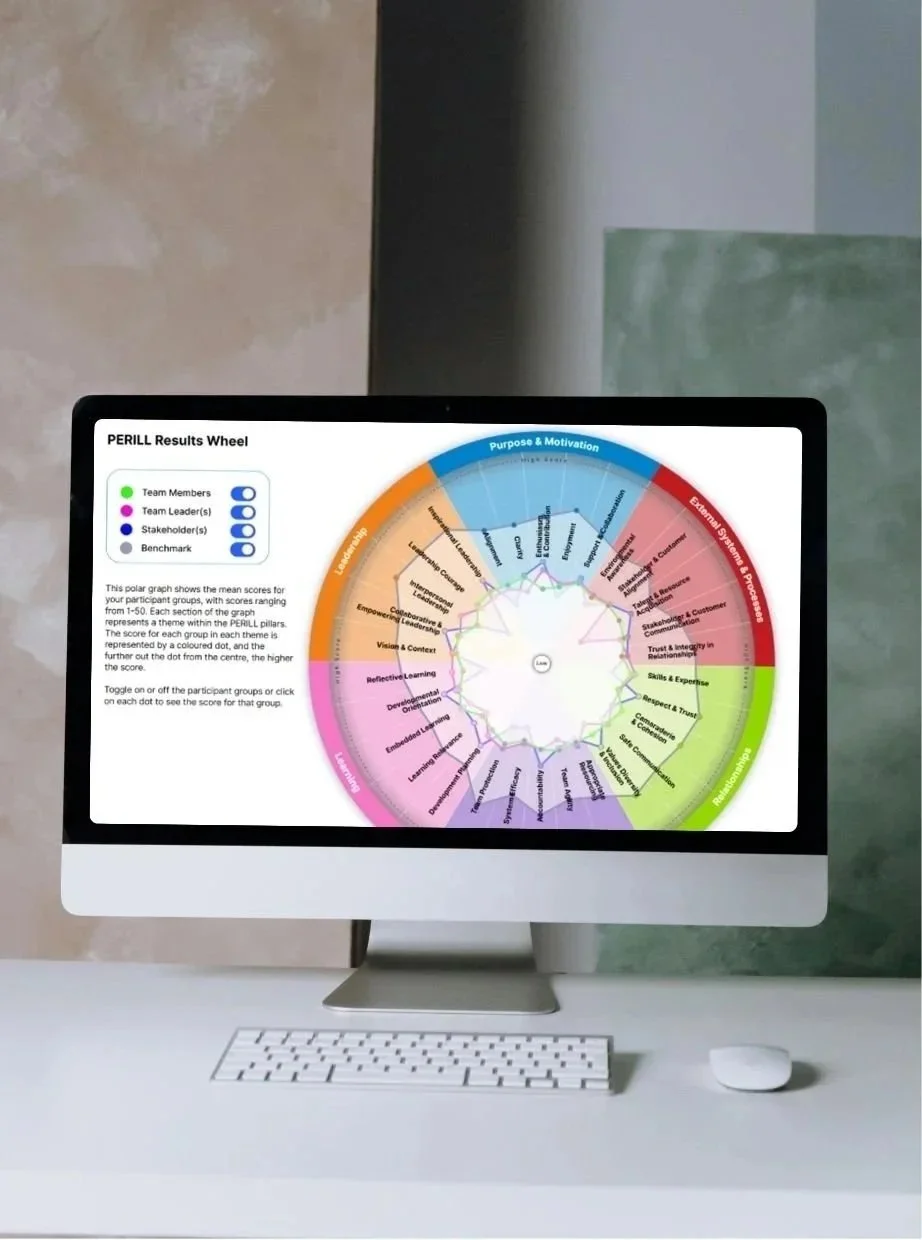
The PERILL model, developed by Professor David Clutterbuck, is one of the most respected evidence-based frameworks for understanding team effectiveness.
It maps how a team is functioning across six interconnected dimensions:
-
Does the team share a clear sense of why it exists, what it's working toward, and what success looks like? Are people aligned on priorities, or pulling in different directions?
-
How does the team relate to the wider organisation? Are stakeholder relationships healthy? Is the team seen as credible and effective by those around it?
-
What's the quality of connection within the team? Is there trust, respect, and genuine camaraderie or tension, avoidance, and unspoken conflict?
-
How does the team actually work together? Are roles clear? Are decisions made efficiently? Do internal processes support or hinder collaboration?
-
Does the team learn from its own experience? Is there a culture of reflection, feedback, and continuous improvement, or does the team repeat the same patterns?
-
How is leadership experienced within the team? Is it collaborative and empowering, or controlling and disconnected? Does the leader create the conditions for the team to succeed?
The diagnostic doesn't just identify weaknesses. It reveals the team's strengths, its unrealised potential, and the specific areas where focused attention will produce the greatest shift.
How it works
-

Online assessment
Every team member and relevant stakeholders complete the diagnostic online. It's anonymous, takes approximately 15–20 minutes, and covers all six PERILL dimensions through structured questions.
-

Analysis
Results are analysed to identify key themes: strengths to build on, critical pain points and their impact, and patterns that may be driving dysfunction. This goes beyond surface scores to map the dynamics between different groups (team members, team leader, stakeholders).
-

Leadership debrief
The findings are initially presented to the key stakeholders (typically the team leader, HR, and C-levels) in a focused debrief session. We walk through the results, explore implications for the business and the team, and agree on the focus areas for the work that follows.
-

Integration into the coaching journey
The diagnostic doesn't sit in a drawer. It becomes the foundation for everything that follows, shaping the design of coaching sessions, the themes we focus on, and the measures we track. When we re-run the diagnostic later, we have a clear before-and-after picture of what has changed.
What the diagnostic produces
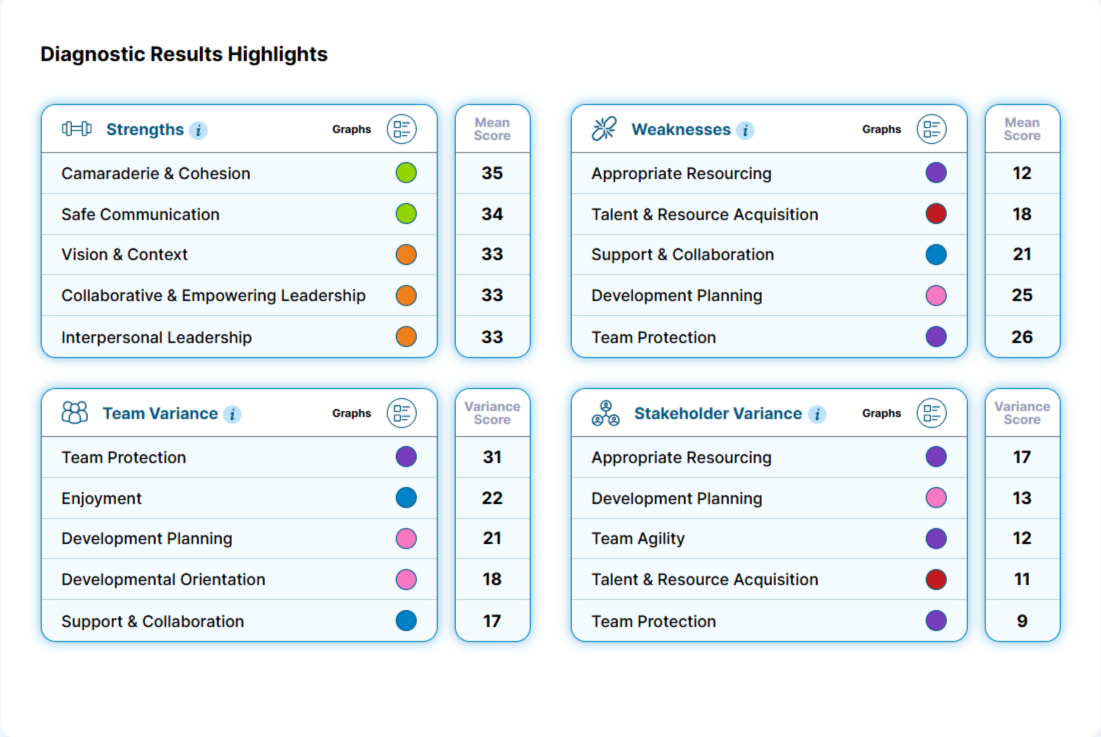
Results Highlights
A clear summary of the team's strengths, weaknesses, tensions, and priority areas for development. This is the "at a glance" view that tells you where attention is needed most.
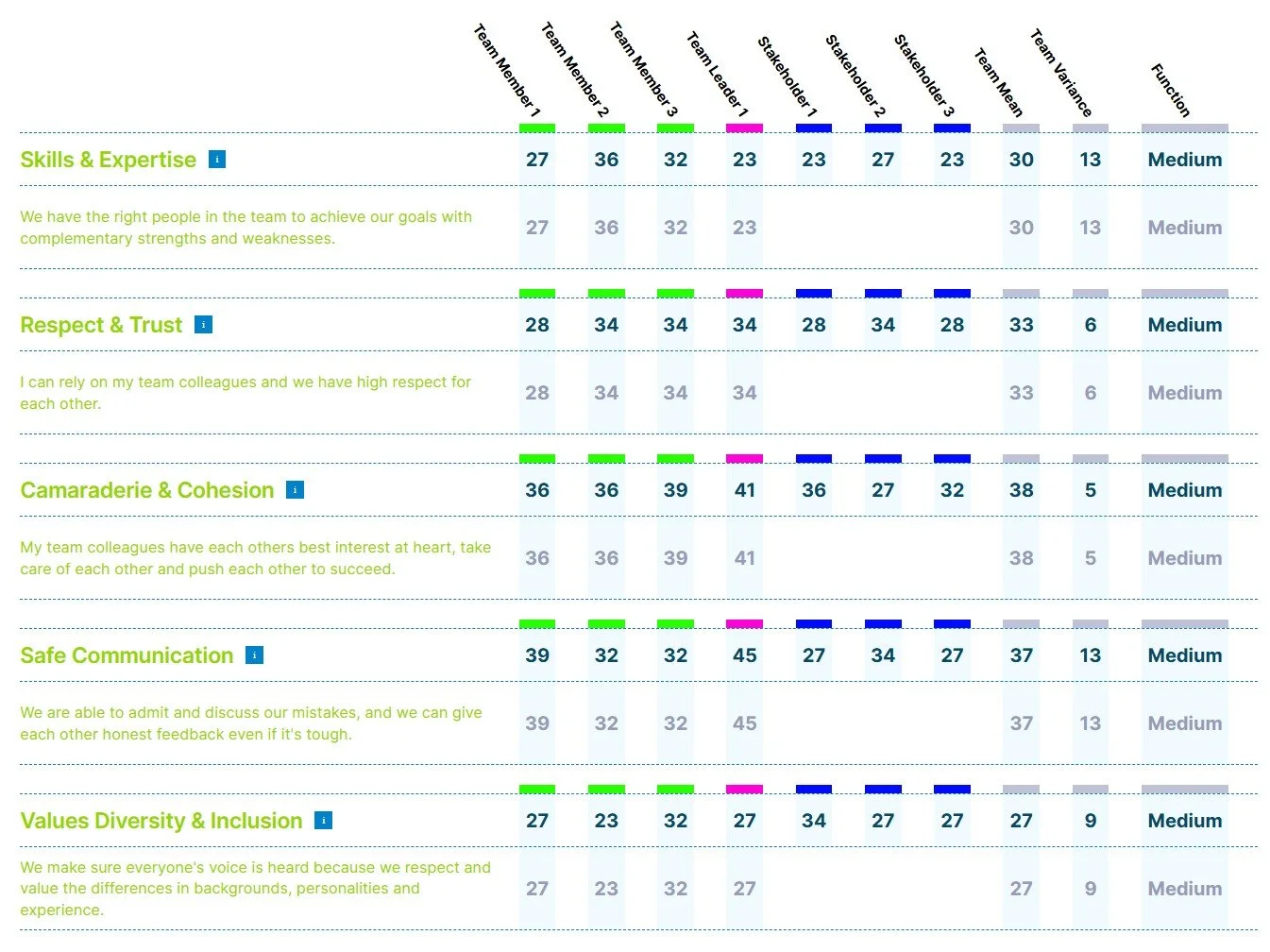
Detailed Data
Granular analysis across all dimensions, broken down by participant group (team members, team leader, stakeholders). This reveals the perception gaps that drive misalignment, where the leader sees strength but the team sees dysfunction, and vice versa.
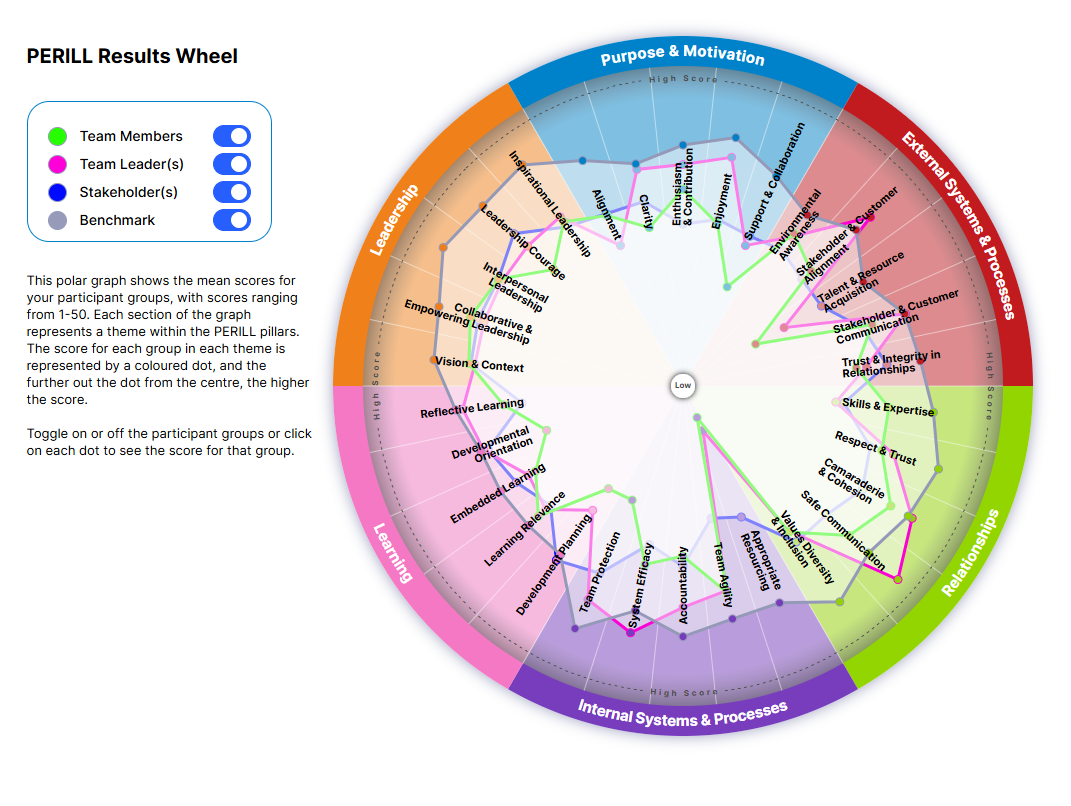
Benchmarking
Comparison with other teams, so you can see what's typical and what's exceptional. This puts your team's results in context. Not just “how are we doing?", but "how are we doing relative to similar teams?"
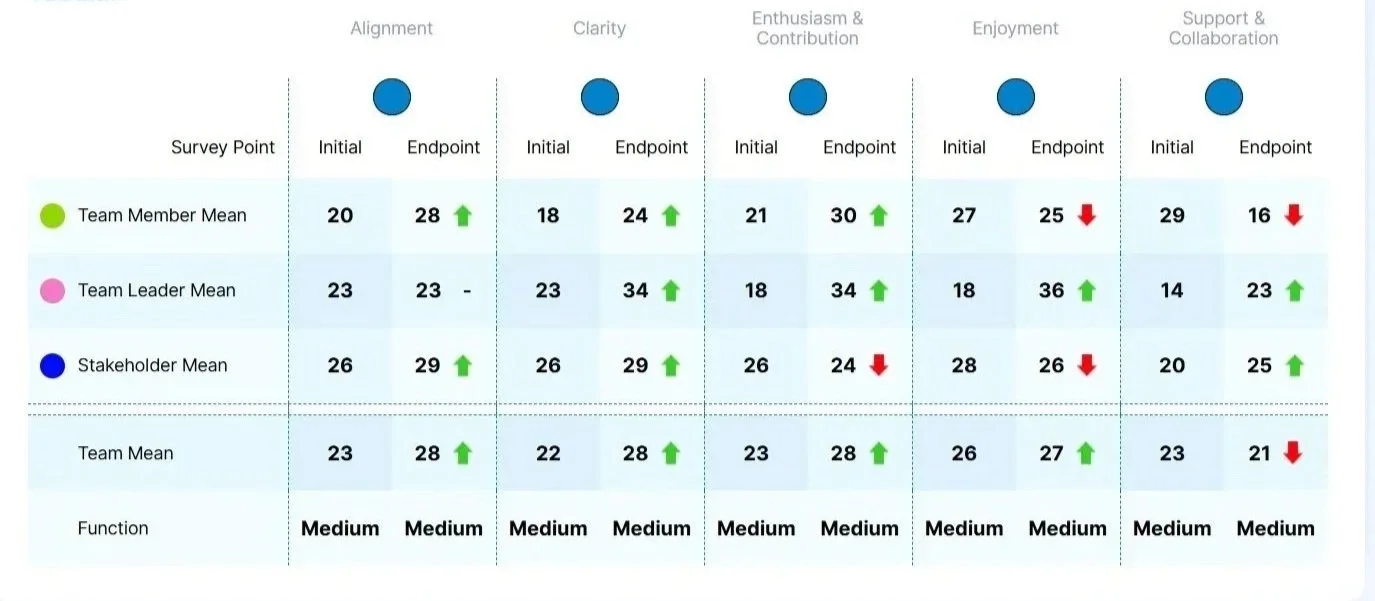
Comparative Results (re-diagnostic)
When we re-run the diagnostic after the coaching engagement, you get a direct before-and-after comparison. This is measurable evidence of change; the kind of data that justifies the investment and makes progress visible to senior leadership.
See what a PERILL diagnostic reveals
Get a sample report to see the kind of insights your team would receive, including the PERILL wheel, strengths and weaknesses summary, and benchmarking data.
How this is different from an engagement survey
Engagement surveys measure how people feel. The PERILL diagnostic measures how the team functions: the structural, relational, and leadership conditions that produce those feelings.
It doesn't ask "are you satisfied?" It asks "can you do your best work here and what's getting in the way?" The difference is the difference between knowing your team is frustrated and knowing why they're frustrated and what needs to change.
It's also not a one-off snapshot. Because we re-run it after the coaching engagement, it becomes a living measure of progress, not another report that sits on a shelf.

The diagnostic is where every engagement begins
The PERILL Team Diagnostic is the starting point of the team coaching work. It's integrated into the full process of understanding your team, designing the right intervention, and measuring what changes.
If you're curious about what this could reveal about your team, the best next step is a conversation.